East Coast Grapples with Lingering Effects of Winter Storm as International Tensions Rise
The East Coast of the United States faced a weekend of weather-related challenges, while internationally, tensions in the Middle East escalated following warnings from Iran's supreme leader.
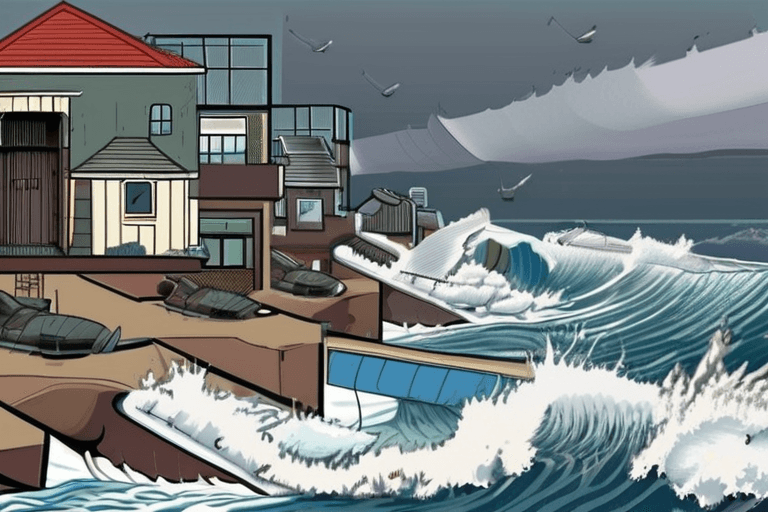
On the East Coast, communities were still reeling from the aftermath of a severe winter storm that brought blizzard-like conditions and frigid temperatures. According to CBS News, the storm, characterized as a "bomb cyclone," delivered heavy snowfall to the Southeast, with Charlotte, North Carolina, experiencing one of its heaviest snowfalls in years, accumulating roughly a foot or more in some areas. As of Sunday, the storm was moving off into the Atlantic, pulling away from the Outer Banks of North Carolina, with minimal additional snowfall expected. Coastal flooding, high winds, and bitter cold remained concerns through Sunday afternoon. Approximately 150 million people were under cold weather alerts. The storm followed another icy blast the previous week that was blamed for dozens of weather-related deaths and left tens of thousands of homes and businesses without power.
Meanwhile, at the Kennedy Space Center in Florida, workers braved sub-freezing temperatures to continue preparations for a critical fueling test of NASA's Space Launch System (SLS) rocket. The test, a dress-rehearsal countdown, is intended to clear the way for the launch of the Artemis II mission, which will send four astronauts on a flight around the moon. The countdown began Saturday evening and was scheduled to continue through the start of a simulated launch window opening at 9 p.m. EST Monday. The test was initially delayed two days due to predicted arctic weather along Florida's Space Coast, which in turn pushed the launch of the Artemis II mission from Feb. 6 to no earlier than the night of Feb. 8, Super Bowl Sunday.
Internationally, Iran's Supreme Leader Ayatollah Ali Khamenei warned that any attack by the United States would ignite a "regional war" in the Middle East. His comments, reported by the Tasnim news agency, came in response to President Trump's threats of military intervention following Iran's crackdown on recent nationwide protests. Khamenei's statement, made to a crowd at his compound in Tehran, represented the most direct threat he had issued since the USS Abraham Lincoln aircraft carrier group arrived in international waters off Iran, in the Persian Gulf.
In other international news, Venezuelan opposition leader Maria Corina Machado, whose party won the 2024 election, stated that a transition away from the remnants of the Maduro regime was "unstoppable," despite the absence of a clear timeline for new elections. In an interview with "Face the Nation" moderator Margaret Brennan, Machado, a Nobel Peace Prize winner, said that any positive change made by the interim government was due to pressure from the Trump administration but may ultimately not hold legal weight. She also noted that the U.S. military operation to capture former Venezuelan President Nicolás Maduro "sent a clear message" to members of his regime who still run the South American country, "and they're starting to realize that things have changed for good."
Margaret Brennan moderated "Face the Nation" and interviewed Maria Corina Machado. The broadcast also included interviews with Rep. Michael McCaul, Republican of Texas, Trump economic adviser Gary Cohn, Oklahoma City Mayor David Holt, Mesa, Arizona Mayor Mark Freeman, Kansas City, Missouri, Mayor Quinton Lucas, and Miami Mayor Eileen Higgins.

















Discussion
AI Experts & Community
Be the first to comment